OpenPromo
TL;DR
Problem
Small businesses are creating content constantly, but without strategic direction — they don't know what to create, when to post, or whether any of it is working.
Solution
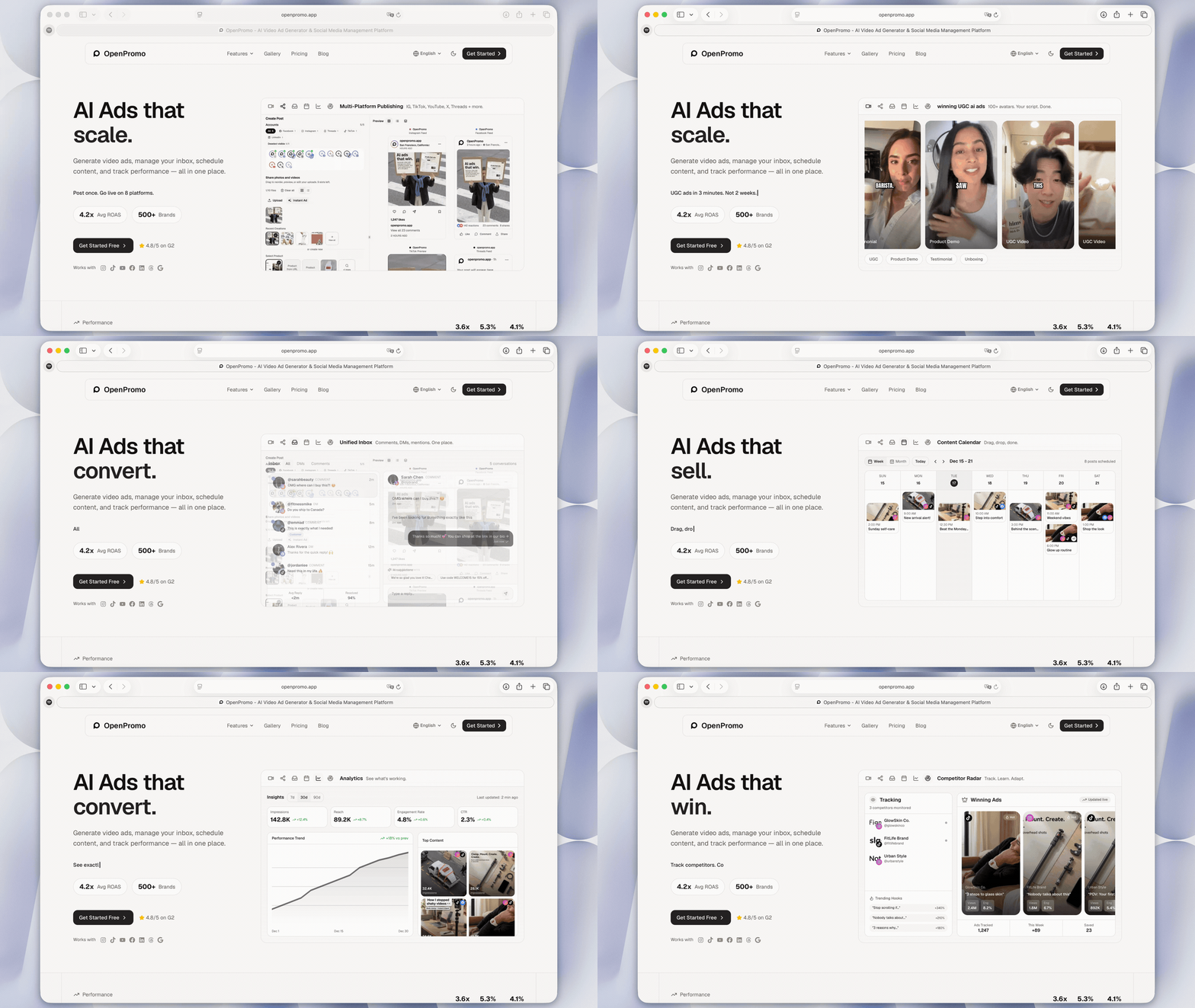
An AI-powered growth platform that helps small businesses create promotional content, manage social accounts, and learn from competitors in one place.
Impact
0→1
Designed a full-stack growth intelligence platform from scratch
3×
Faster ad creation workflow
70%
Faster cross-platform publishing
Small businesses are flying blind
Small businesses are outgunned. Enterprise brands have dedicated marketing teams, agency partnerships, and data analysts telling them exactly what content to create next. Small businesses have none of that — just a phone, a few hours a week, and a lot of guessing.
The real cost isn't production — it's the hours spent deciding what to create, manually posting to eight platforms, and staring at analytics that don't tell you what to do next.
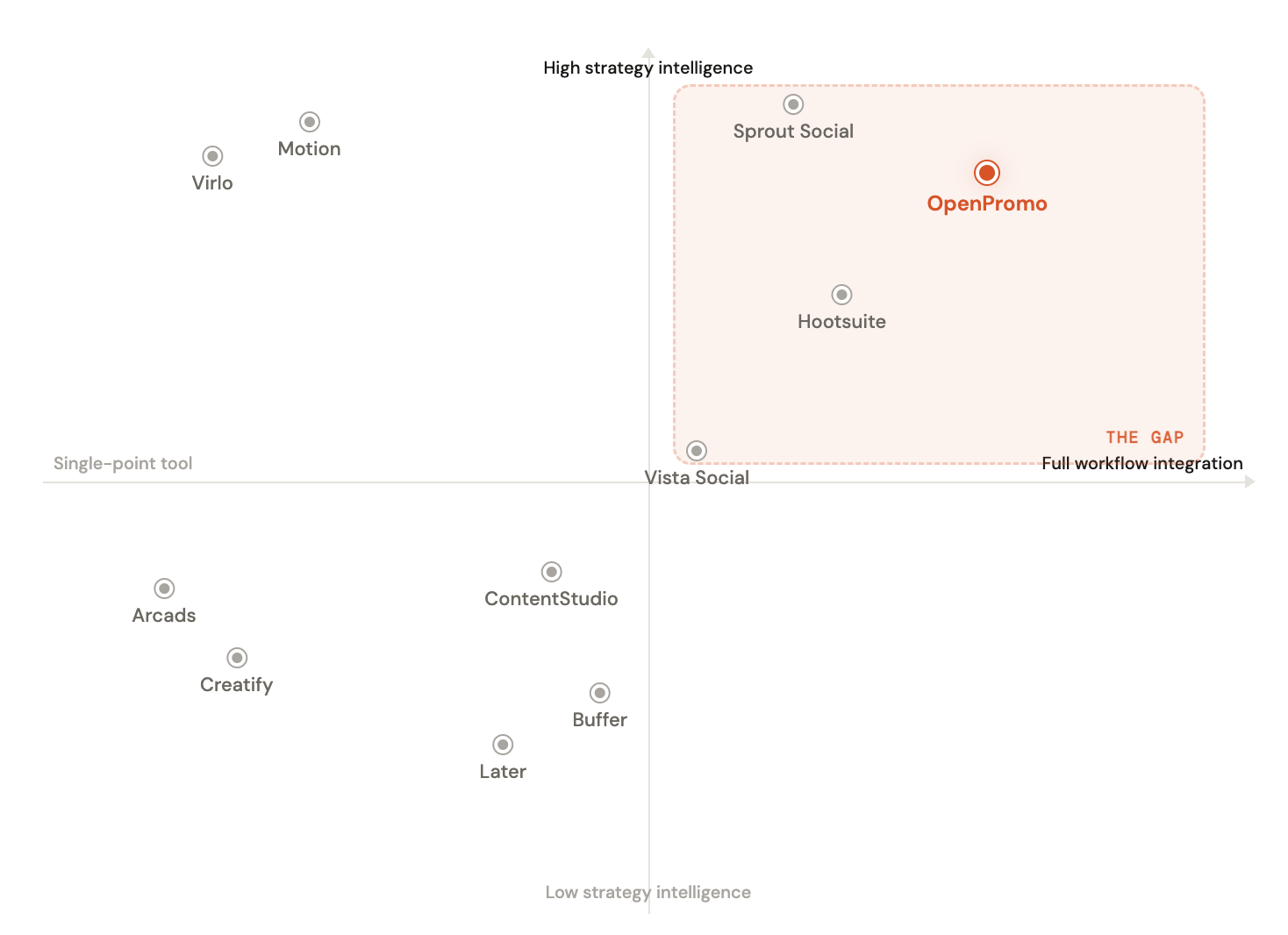
Competitive landscape showing gaps in AI-driven growth features.
This is the gap OpenPromo was designed to fill — the intelligence layer that SMBs have never had access to.
The real bottleneck isn't tools — it's decisions
I interviewed small business owners to understand their daily social media workflow and marketing challenges.

"We spend hours making posts, but we don't know if any of it is actually working."
Most businesses spend significant time producing content but struggle to determine what content actually drives growth.
Research Insights
73%
of small businesses are not confident their marketing strategy is working.
56%
of SMBs spend one hour or less per day on marketing.
54%
of SMBs struggle to produce content consistently.
Key Insight
The real bottleneck for small businesses is not content creation tools. It is decision-making.

Design Opportunity: How might we help small businesses decide what content to create next using signals from competitors, performance analytics, and emerging trends?
Design Process
Starting Assumption
When I first joined OpenPromo, my assumption was straightforward: small businesses need better content creation tools. Specifically, I believed AI video generation would be the highest-value feature — if we could help them produce professional video ads without a production team, that would remove the biggest barrier.
This assumption was wrong.
Through user interviews, a different picture emerged. Small businesses weren't struggling to create content — many were already posting every day. The real problem was that they had no idea whether any of it was working, or what to create next. The bottleneck wasn't production. It was decision-making.
This shifted the entire product direction: from a content creation tool to a growth intelligence platform. AI generation stayed — but as one part of a larger system designed to answer a harder question: what should I create next, and why?
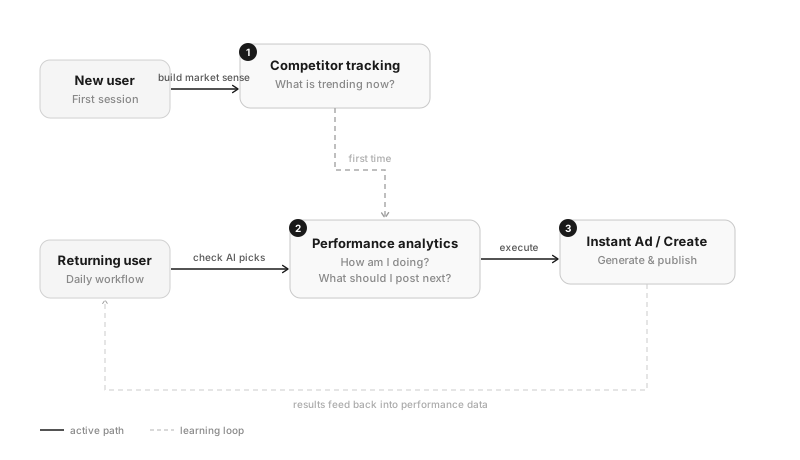
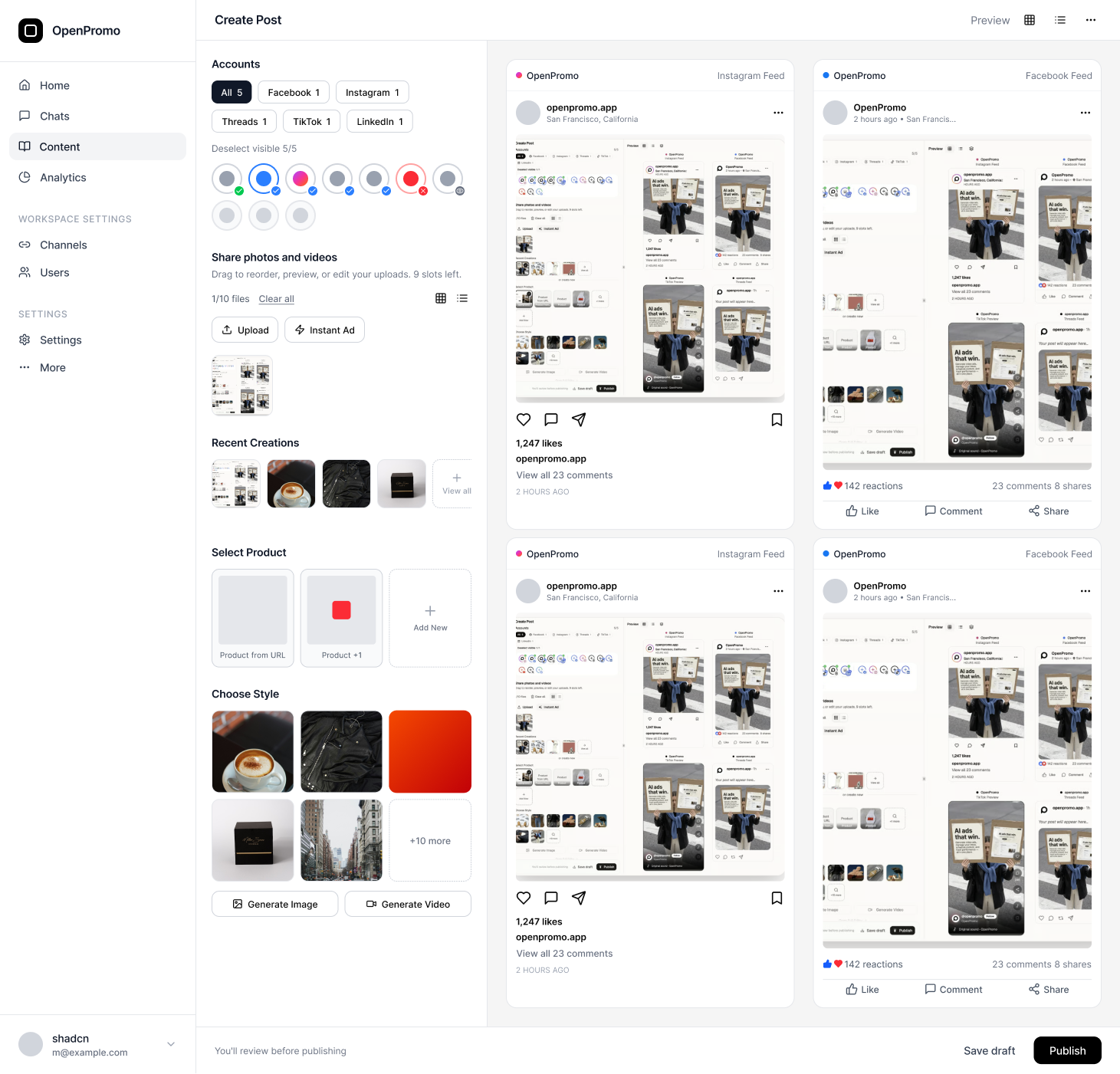
From brief to live ad in under 5 minutes

Instant Ad is a standalone workspace accessible from the left menu bar. Users go there first, then switch to Create Post to publish.
Problem
The workflow is fragmented. Users move back and forth between two separate areas to complete one task.
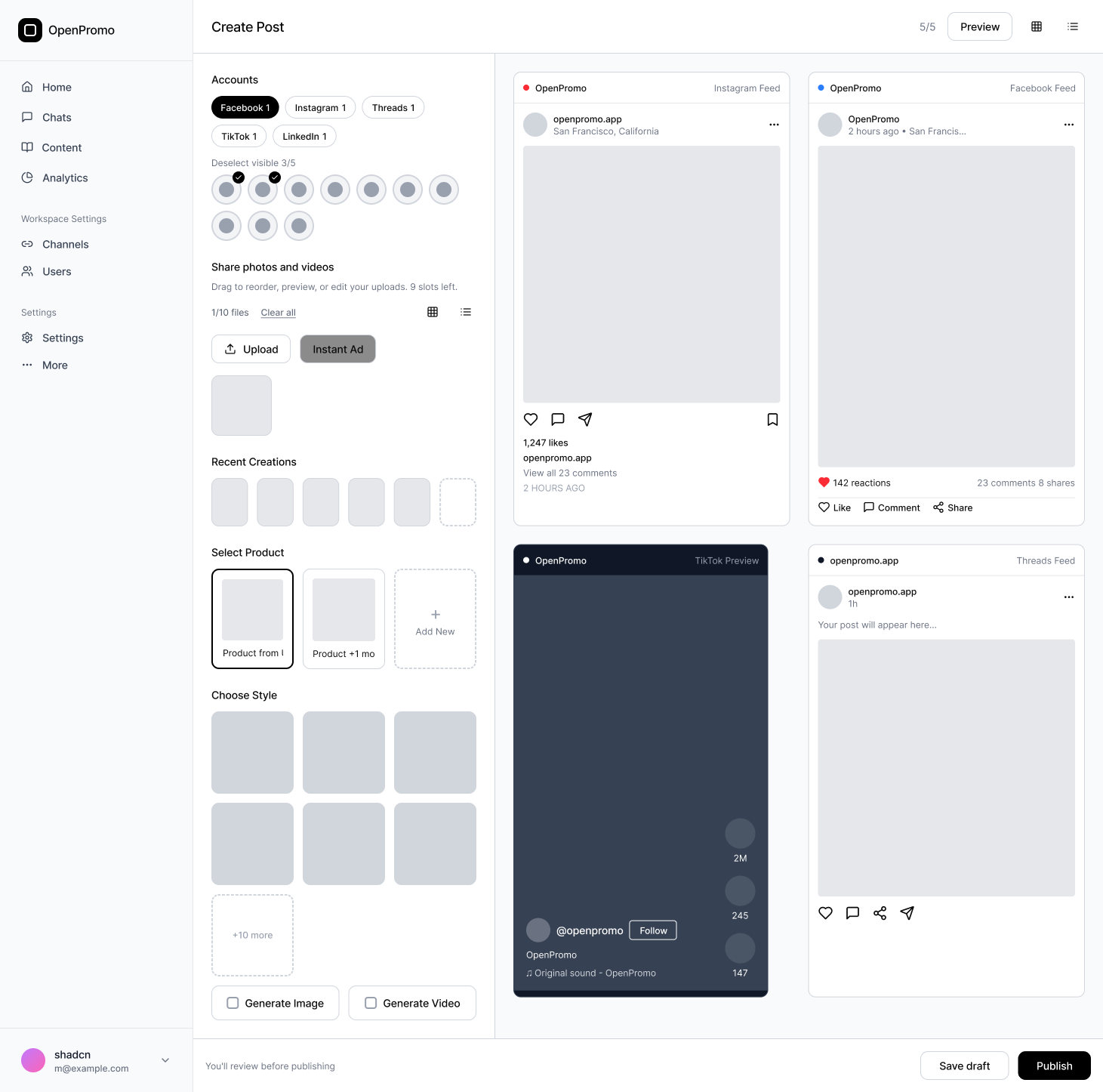
We considered a modal or drawer. We chose tabs — tabs keep both creation modes equally visible with the lowest switching cost. A step-by-step wizard was also explored but dropped: ad creation is non-linear, so a single-page layout lets users revise any step at any time.
Learning from competitors, not just watching them
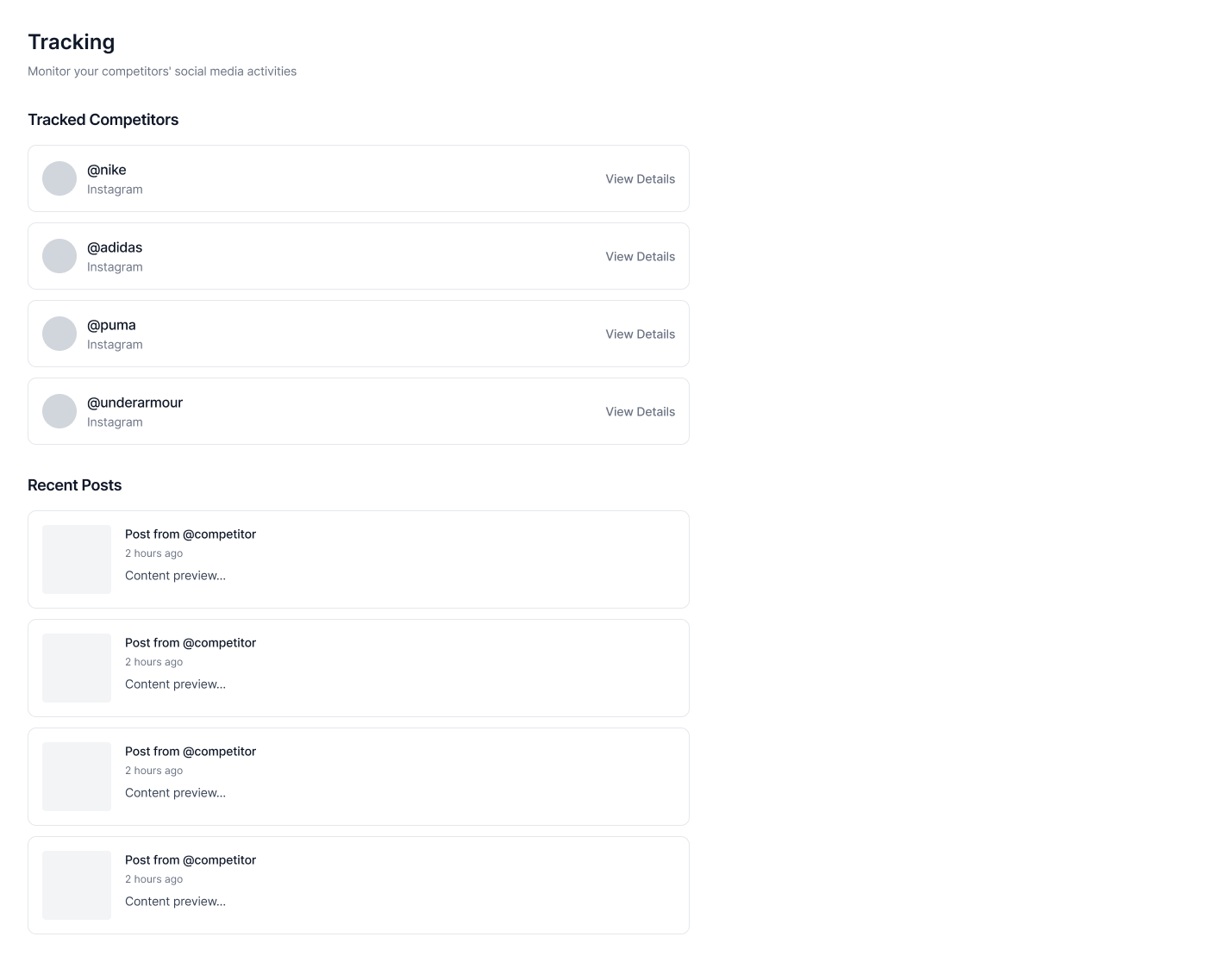
Design Goal: Solve the most basic question — can users see what competitors are posting?
Features
- Add competitor accounts
- View latest posts
Limitations
- View-only
- Trend judgment fully manual
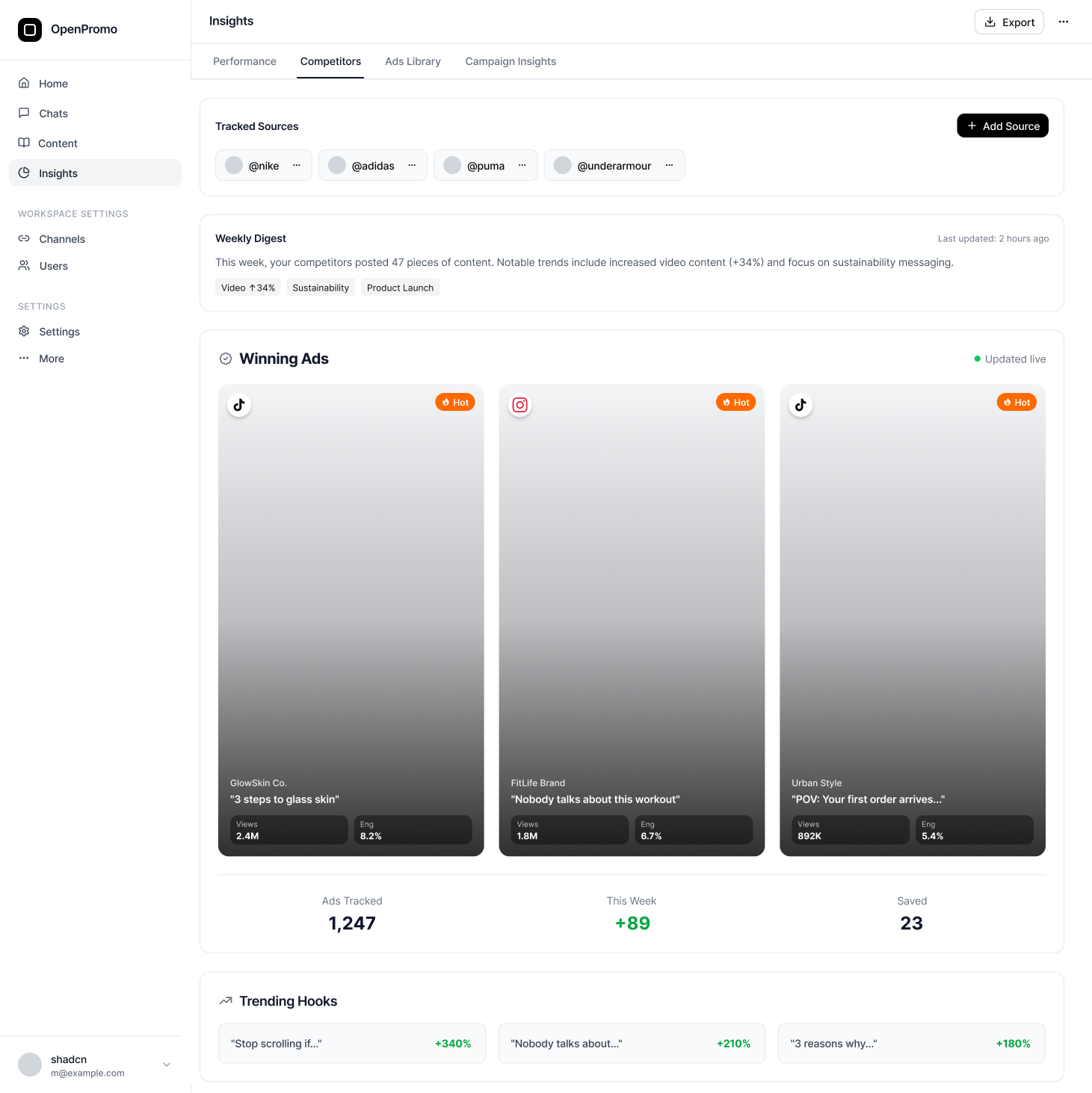
Added basic analytics. Goal shifted from viewing content to understanding performance.
Users can
- Identify top-performing posts
- Find high-engagement content
Still no actionable insights
Design Goal: Let the system automatically tell users what's happening. Added an Anomalies tab — a dedicated tab (vs. filter) because anomalies are proactive signals, not passive discovery.

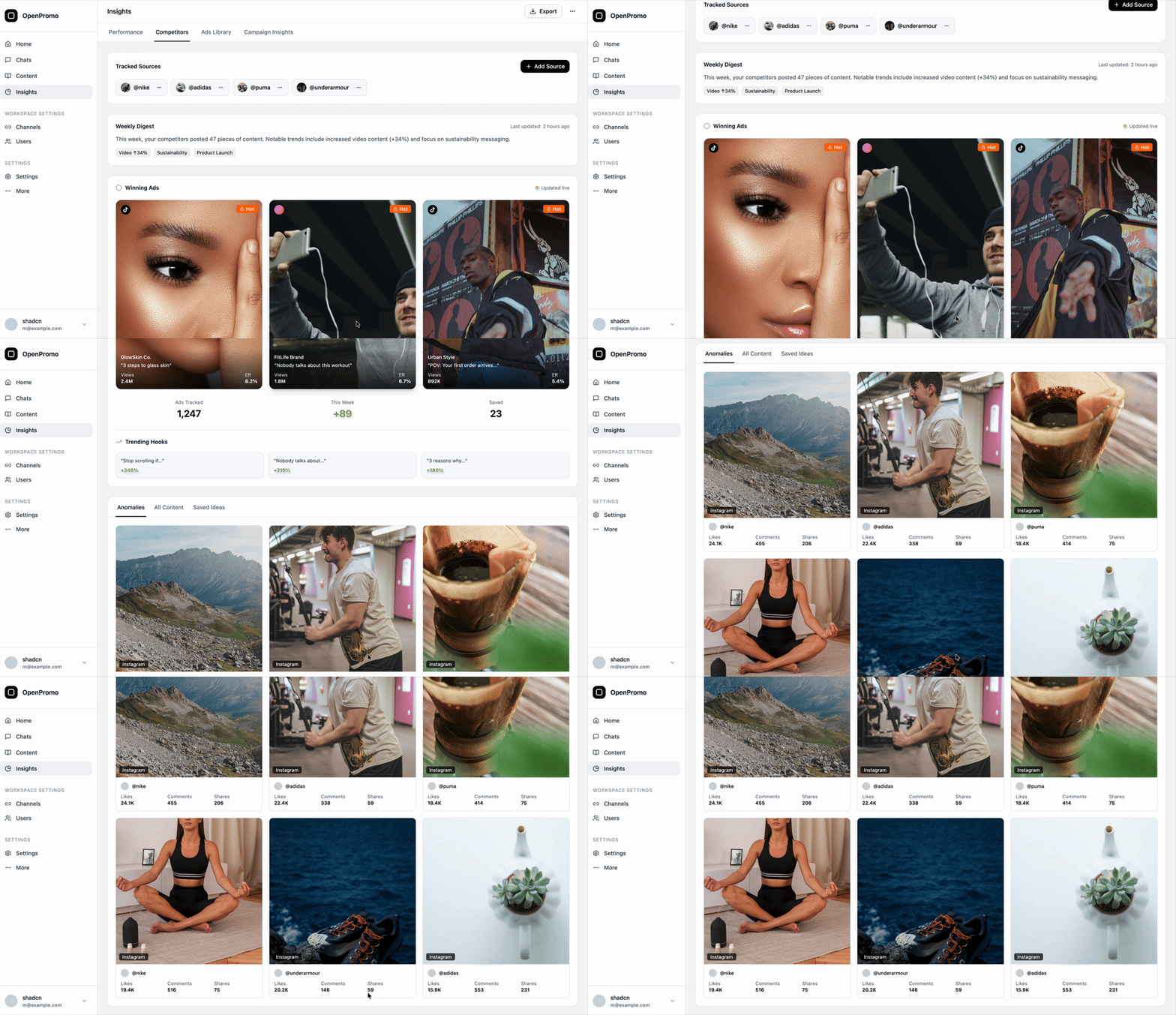
Growth comes from learning what competitors are doing right and responding faster. This feature helps businesses track competitor profiles, post performance, and viral content patterns to guide smarter content decisions.
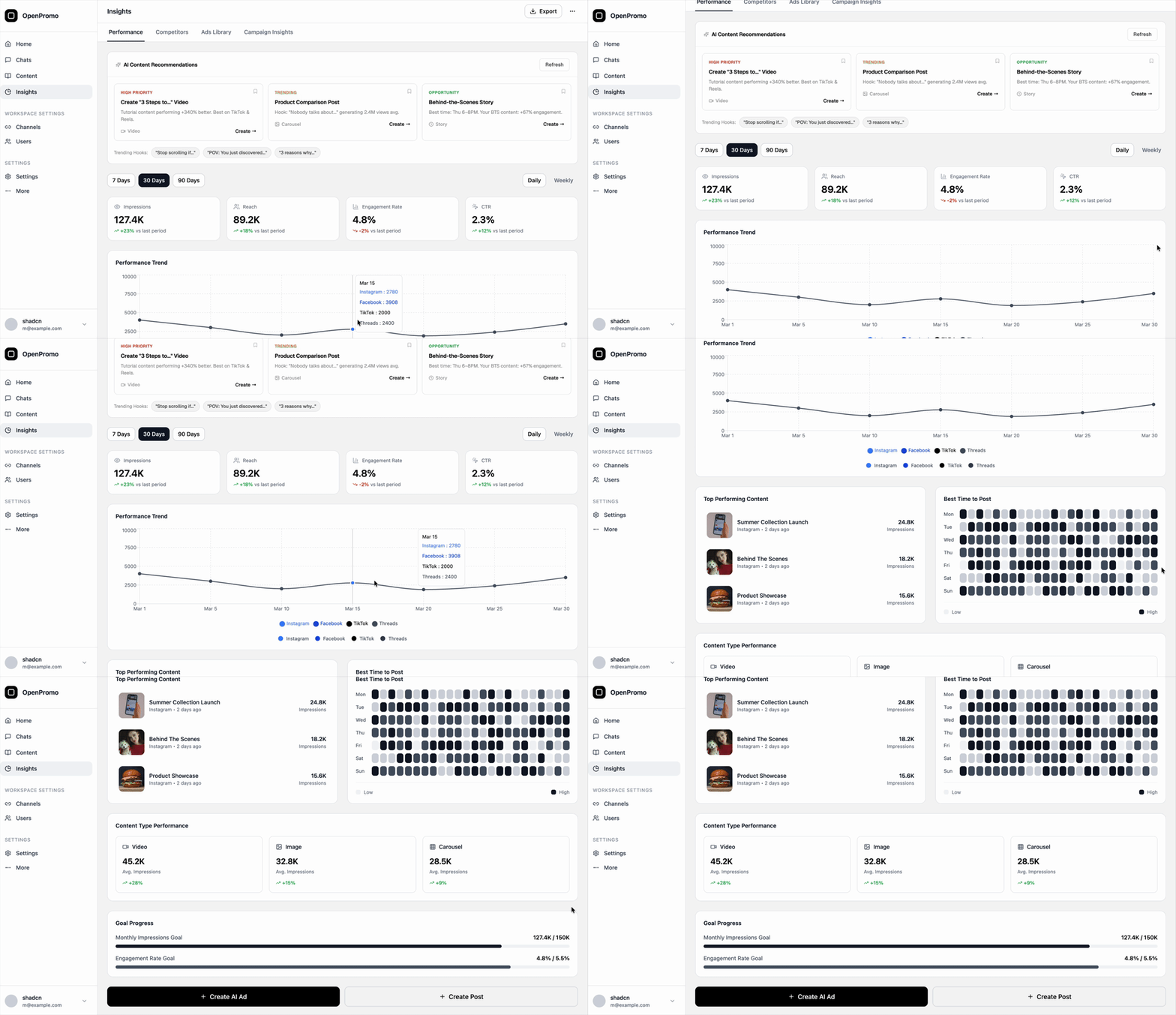
Data that tells you what to do next, not just what happened
Problem
Users see Impressions increased by xx%, but don't know why or what to do next. The data is there, but the insight is missing.


Added Top Content and Content Type. But after reviewing data, users must manually switch to Create Post or Create Ad — completely disconnected.
Problem
Disconnect between data and action. The system still doesn't say: “This is what you should do now.”

Added AI Recommendations, Goal Progress, and a bottom CTA. The system proactively tells users:
- High Priority: Create a "3 Steps to..." video
- Trending: Use the "Nobody talks about..." hook
- Opportunity: Post BTS content Thursday 6-8 PM
Reason
AI Recommendations sit at the top of Performance so “what to do next” is prioritized over “what the numbers are.”
AI doesn't replace strategy — it enables it
This project highlighted how generative AI is reshaping marketing workflows. Small businesses traditionally rely on agencies to produce advertising content, which is both expensive and slow. As AI generation tools mature, the barrier to creating promotional content is rapidly decreasing. However, AI alone does not solve the problem. The real opportunity lies in integrating AI into the full promotion workflow — from content creation to publishing and competitive insights. I believe future marketing platforms will evolve from simple management dashboards into growth intelligence systems that help businesses understand what content to create next.